
How do I create a monthly budget? 8 simple steps to starts with understanding your income, organizing your expenses, and giving every dollar a purpose. A well-designed monthly budget helps you manage bills, save for future goals, and make smarter financial decisions without feeling overwhelmed.
Creating a budget isn’t about restricting your lifestyle—it’s about building a plan that reflects your priorities. Whether you’re budgeting for the first time or trying to improve your money habits, this guide will walk you through a practical system you can use every month.If you have ever asked yourself, “How do I create a monthly budget?”, this guide will provide a simple step-by-step process.
Why Is Creating a Monthly Budget Important? and How Do I Create a Monthly Budget?
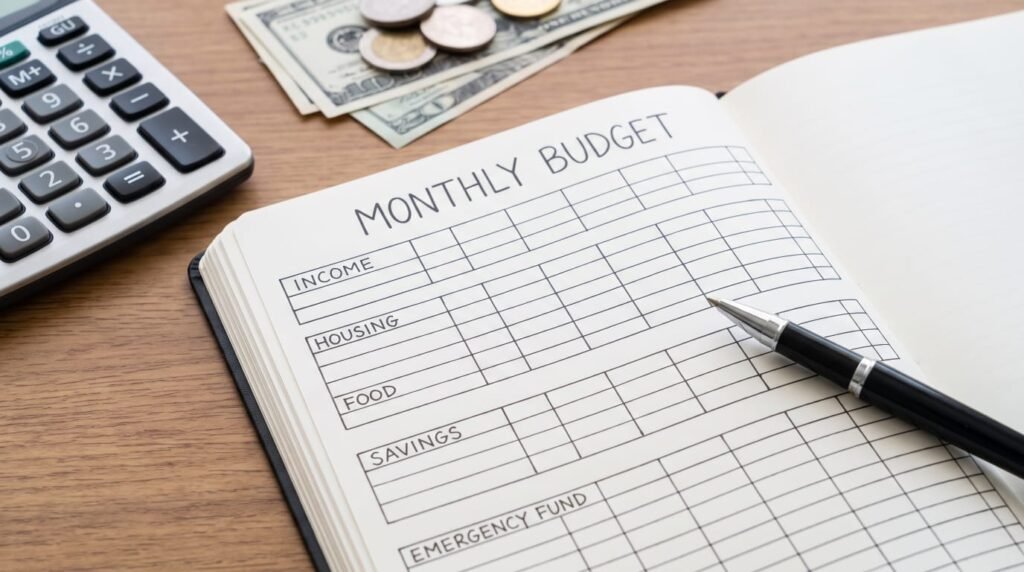
A monthly budget is a financial plan that estimates how much money you expect to earn and how you intend to spend or save it over one month. It helps you balance income with expenses while preparing for both expected and unexpected costs.
A good budget should be flexible enough to adapt as your life changes but structured enough to keep you on track.
Why Is Creating a Monthly Budget Important? (How do I create a monthly budget successfully)
Many people know how much they earn but not exactly where their money goes. A budget provides clarity and helps you:
- Stay on top of monthly bills.
- Reduce unnecessary spending.
- Build an emergency fund.
- Save for future purchases.
- Avoid relying on debt for everyday expenses.
- Prepare for irregular costs like holidays or annual insurance premiums.
- Make steady progress toward financial goals.
Budgeting also reduces financial stress because you make decisions with a plan instead of reacting to surprises. “If you’re wondering How Do I Create a Monthly Budget?, follow these steps.”
Step 1: Calculate Your Monthly Income to Create a Monthly Budget

Start with the money you actually receive after taxes and deductions.
Include sources such as:
- Employment income
- Freelance or contract work
- Self-employment earnings
- Side businesses
- Rental income
- Government benefits
- Pension payments
- Investment distributions
If your income changes from month to month, estimate conservatively using a lower average rather than your highest earning month.
Step 2: List Every Monthly Expense for your Monthly Budget
Next, write down every expense you expect to pay.
Fixed Expenses
These usually stay the same each month:
- Rent or mortgage
- Insurance premiums
- Loan payments
- Internet service
- Phone plans
- Subscription services
Variable Expenses
These fluctuate depending on usage or lifestyle:
- Groceries
- Fuel
- Dining out
- Entertainment
- Clothing
- Household supplies
- Personal care
- Transportation
Don’t forget expenses that happen only a few times a year. Divide those annual costs by 12 so you save for them gradually throughout the year.
Step 3: Compare Income and Spending
Subtract your planned expenses from your expected monthly income.
- If money remains after expenses, you have room for savings or investments.
- If planned spending exceeds income, identify areas where you can reduce costs or increase earnings.
The objective is to create a realistic plan that fits your financial situation.
Step 4: Organize Spending Into Categories
Grouping expenses makes your budget easier to understand and maintain.
Common categories include:
- Housing
- Utilities
- Food
- Transportation
- Healthcare
- Insurance
- Childcare
- Debt payments
- Savings
- Entertainment
- Miscellaneous spending
You can customize categories to match your own lifestyle.
Step 5: Build Savings Into Your Budget

Saving should be treated as a regular monthly expense rather than waiting to see what remains.
Consider allocating money toward:
- Emergency savings
- Retirement
- Travel
- Home maintenance
- Education
- Vehicle replacement
- Major purchases
Automating transfers to savings accounts can make this process easier.
Step 6: Plan for Debt Repayment
If you have loans or credit card balances, include them in your budget.
Pay required minimum payments first, then direct additional money toward high-interest balances whenever possible. A consistent repayment strategy can reduce interest costs and free up future income.
Step 7: Track Spending During the Month
Creating a budget is only the beginning. Monitoring actual spending helps you stay accountable.
Many people review transactions:
- Daily
- Weekly
- Every payday
- At the end of each month
Choose a routine you can maintain consistently.
Step 8: Review and Adjust Your Monthly Budget
Your budget should evolve with your circumstances.
Review it whenever you experience:
- Income changes
- Family size changes
- New financial goals
- Unexpected expenses
- Major purchases
- Rising living costs
Adjusting your plan regularly keeps it relevant and sustainable.
Example Monthly Budget
| Category | Amount |
| Housing | $1,800 |
| Utilities | $300 |
| Groceries | $700 |
| Transportation | $500 |
| Insurance | $350 |
| Healthcare | $200 |
| Entertainment | $250 |
| Savings | $900 |
| Debt Payments | $600 |
| Miscellaneous | $400 |
| Total | $6,000 |
This example illustrates one possible allocation. Your budget should reflect your own income and priorities.
Tips for Building a Budget You Can Stick With
- Start with simple categories.
- Base decisions on actual spending data.
- Include occasional and seasonal expenses.
- Review subscriptions regularly.
- Leave room for unexpected costs.
- Avoid setting unrealistic spending limits.
- Celebrate progress instead of aiming for perfection.
- Revisit your plan every month.
Common Budgeting Mistakes
Many beginners encounter similar challenges:
- Forgetting annual expenses.
- Ignoring small daily purchases.
- Underestimating grocery costs.
- Failing to track transactions.
- Creating too many categories.
- Not updating the budget after life changes.
- Skipping savings until the end of the month.
Recognizing these pitfalls early can make budgeting much easier.
Frequently Asked Questions About How To Create a Monthly Budget
How do I create a monthly budget if I have never budgeted before?
Start by calculating your monthly income, listing recurring expenses, estimating variable spending, setting savings goals, and tracking every purchase for at least one month.
What should be included in a monthly budget?
Include income, housing, utilities, groceries, transportation, insurance, healthcare, debt payments, savings, entertainment, subscriptions, and planned irregular expenses.
How much of my income should I save each month?
The ideal amount varies, but saving consistently—even if it starts small—is often more important than waiting until you can save a larger percentage.
How often should I review my budget?
Review your budget monthly and update it whenever your income, expenses, or financial goals change.
What if my income changes every month?
Estimate using a conservative average and prioritize essential expenses first. During higher-income months, direct extra funds toward savings or debt reduction.
Should I include annual bills in my monthly budget?
Yes. Divide annual expenses by 12 and save that amount each month so large bills do not disrupt your finances.
How can I reduce monthly expenses?
Review recurring subscriptions, compare service providers, plan meals, avoid impulse purchases, negotiate bills where possible, and monitor discretionary spending.
Is budgeting still useful if I earn a high income?
Absolutely. A higher income does not automatically guarantee financial security. Budgeting helps allocate money efficiently, increase savings, and support long-term goals.
What is the difference between fixed and variable expenses?
Fixed expenses remain relatively stable each month, while variable expenses fluctuate based on usage or lifestyle choices.
Can budgeting help me pay off debt faster?
Yes. A clear budget helps identify extra money that can be directed toward loan balances, reducing debt more quickly while improving overall financial health.
Final Thoughts
Learning how to create a monthly budget is one of the most valuable financial skills you can develop. If you’re wondering how do I create a monthly budget, following these simple steps will help you stay in control of your finances.A thoughtful plan allows you to spend with confidence, prepare for unexpected events, and work steadily toward your goals.
The best budget is not the most complicated one—it’s the one you consistently follow. Start with accurate numbers, track your progress, make adjustments when needed, and allow your budget to evolve as your life changes.